


If you run Công cụ xếp hạng công cụ tìm kiếm GSA, you have spent hours on the things that feel like they matter. Verified lists. Proxies. Thread counts. Chất lượng bài viết. Tỷ lệ neo.
Hầu như không ai để ý đến hai khu vực nằm trong các lựa chọn dự án: Về bản thân bạn và Bình luận trên blog. Chúng được đóng gói sẵn, trông khá cầu kỳ và được quay nhiều vòng, và chúng hoạt động tốt. Vì vậy, người ta thường để chúng ở đó.
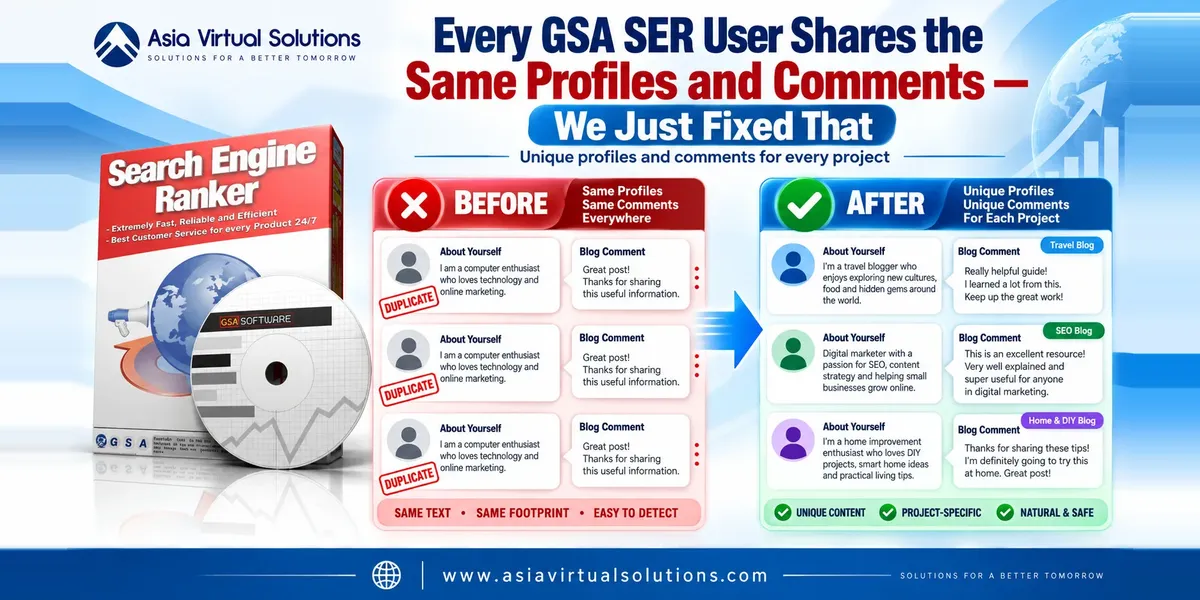
Hai trường thông tin đó cũng là những đoạn văn bản được sao chép nhiều nhất trong toàn bộ hệ sinh thái GSA SER. Cùng một tên, cùng một thị trấn, cùng một bình luận, được đăng bởi hàng nghìn người khác nhau trên hàng triệu trang web khác nhau, trong hơn một thập kỷ. Đây là những gì thực sự có trong đó, tại sao điều đó lại là một vấn đề và những gì chúng tôi đã thay đổi hôm nay.
💡 Tóm lại
Văn bản mặc định phần Giới thiệu bản thân và Bình luận blog được chia sẻ bởi hầu hết mọi người dùng GSA SER hiện có — điều này khiến nó trở thành điểm yếu duy nhất mà không danh sách xác thực nào có thể khắc phục được cho bạn.
Kể từ hôm nay, mọi dự án được xây dựng thông qua GSA SER Builder đều tạo ra hồ sơ và văn bản bình luận riêng, được viết cho đối tượng người dùng của trang web đó, bằng ngôn ngữ của dự án đó.
- Trường "Giới thiệu về bạn" mặc định được lấy từ cùng một nhóm cố định — khoảng 100 tên gọi, 100 họ và 100 tên thị trấn — trong mọi dự án mà nó từng được tích hợp vào.
- Ô bình luận mặc định trên blog là một tập hợp các câu spam được thu thập sẵn. Các bộ lọc bình luận đã lưu trữ chính xác những câu này từ khoảng năm 2011.
- Cả hai đều chỉ sử dụng tiếng Anh, vì vậy một chiến dịch quảng bá bằng tiếng Thổ Nhĩ Kỳ, tiếng Thái hoặc tiếng Nhật đã tự giới thiệu bằng tiếng Anh trên các trang web mà không ai viết tiếng Anh.
- Khối bình luận về cổ phiếu cũng bị xóa. của bạn Từ khóa "tiền" được đưa vào các blog không liên quan vì nó sử dụng macro GSA sai.
- Mỗi dự án GSA SER Builder hiện nay đều cung cấp 50 hồ sơ độc đáo và 100 mẫu bình luận độc đáo, bằng ngôn ngữ của dự án, được xây dựng từ chính người dùng của trang web.
🔧 Hai lĩnh vực này thực sự làm gì
Cả hai đều phục vụ cho việc tạo tài khoản và đăng bài trên GSA SER, chứ không phải cho phần bài viết. Đó chính là lý do tại sao chúng không bị kiểm duyệt: bạn không bao giờ đọc chúng trong nội dung được phân phối cho mình, nhưng mọi trang web mục tiêu đều đọc được.
| Cánh đồng | GSA SER xử lý nó như thế nào? | Nơi nó xuất hiện |
|---|---|---|
| Về bản thân bạn | Điền thông tin tiểu sử khi GSA SER đăng ký tài khoản. | Hồ sơ diễn đàn, trang thành viên, hộp thông tin tác giả, tiểu sử web 2.0 |
| Bình luận trên blog | Cung cấp nội dung bình luận trên các công cụ bình luận blog. | Blog tổng hợp, KeywordLuv, PluXml, SPIP, Rocketeer CMS |
Cả hai đều chấp nhận cú pháp spin, và GSA SER chọn một biến thể mới cho mỗi tài khoản và mỗi bài đăng. Đó là phần mà mọi người dựa vào — và đó cũng là điều che giấu vấn đề. Việc sử dụng quá nhiều cú pháp spin bên trong một khối lệnh mà... mọi người đều chia sẻ Điều này tạo ra sự khác biệt rất lớn trong chiến dịch của bạn, nhưng lại không có sự khác biệt nào giữa bạn và người dùng tiếp theo.
🎯 Dấu chân, nói một cách đơn giản
Dấu vết là bất kỳ mô hình nào liên kết các liên kết của bạn với nhau, hoặc liên kết chúng với của người khác. Hầu hết các cuộc thảo luận trên GSA SER đều đề cập đến loại thứ nhất. Đây là loại thứ hai, và nó lớn hơn nhiều.
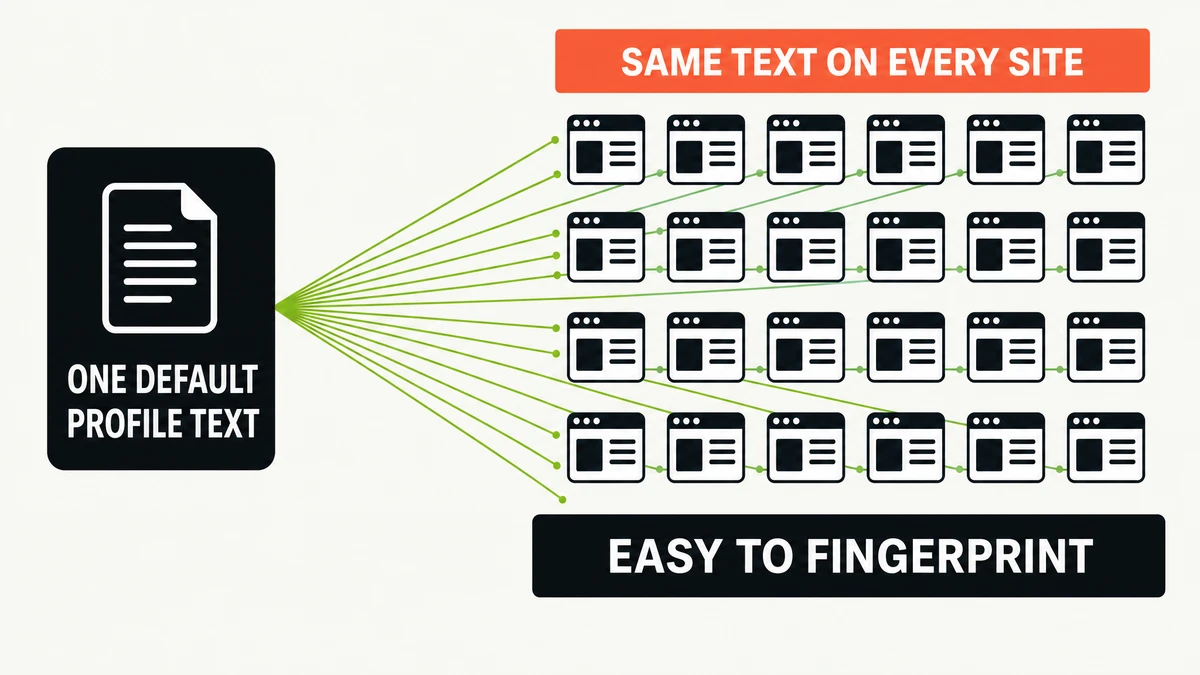
Vì sao điều này quan trọng: Văn bản hồ sơ mặc định được tạo từ các danh sách cố định — khoảng 100 tên gọi, 100 họ, 100 tên thị trấn, cộng thêm danh sách phim, sở thích và xe hơi. Khi kết hợp với nhau, chúng tạo ra hàng triệu sự kết hợp, nghe có vẻ lý tưởng. Nhưng... thành phần Không bao giờ thay đổi. Mọi dự án sử dụng mặc định đều lấy dữ liệu từ cùng một tệp JAR.
Những điều cần kiểm tra: open your project options, look at About Yourself, and search the text for a town name. If you find a list of Canadian towns that has nothing to do with your business, you are on the community default.
Dấu hiệu xấu trông như thế nào: Các hồ sơ của bạn mô tả một kỹ sư điện hạt nhân 34 tuổi đến từ Baie-Comeau, người thích xem phim ít người biết đến và lái xe Bugatti Royale. Thật quyến rũ — và cũng trùng khớp với hàng chục nghìn hồ sơ khác do người khác tạo ra.

2. Bình luận văn bản mà các bộ lọc đã biết
Vì sao điều này quan trọng: Khối bình luận mặc định không phải là bản sao được viết sẵn. Đó là một tập hợp các bình luận spam thực tế được thu thập, và điều đó thể hiện rõ. Các dòng như... “Hôm nay tôi đã lướt web hơn 3 tiếng đồng hồ.”, “Tôi sẽ lập tức nắm lấy tay bạn. RSS cho ăn"”, Và bài viết so sánh BlogEngine, WordPress, B2evolution và Drupal đã được lưu hành từ khoảng năm 2011.
Những điều cần kiểm tra: Hãy lấy bất kỳ câu nào từ phần Bình luận trên Blog của bạn và tìm kiếm câu đó trong dấu ngoặc kép trên Google. Nếu nó trả về hàng nghìn kết quả, thì mọi bộ lọc bình luận cũng đã thấy câu đó rồi.
Dấu hiệu xấu trông như thế nào: Những bình luận được chấp nhận rồi lặng lẽ biến mất sau một tuần. Đó không phải là do xui xẻo. Đó là do bộ lọc nhận diện văn bản.

3. Sử dụng sai ngôn ngữ trên sai trang web
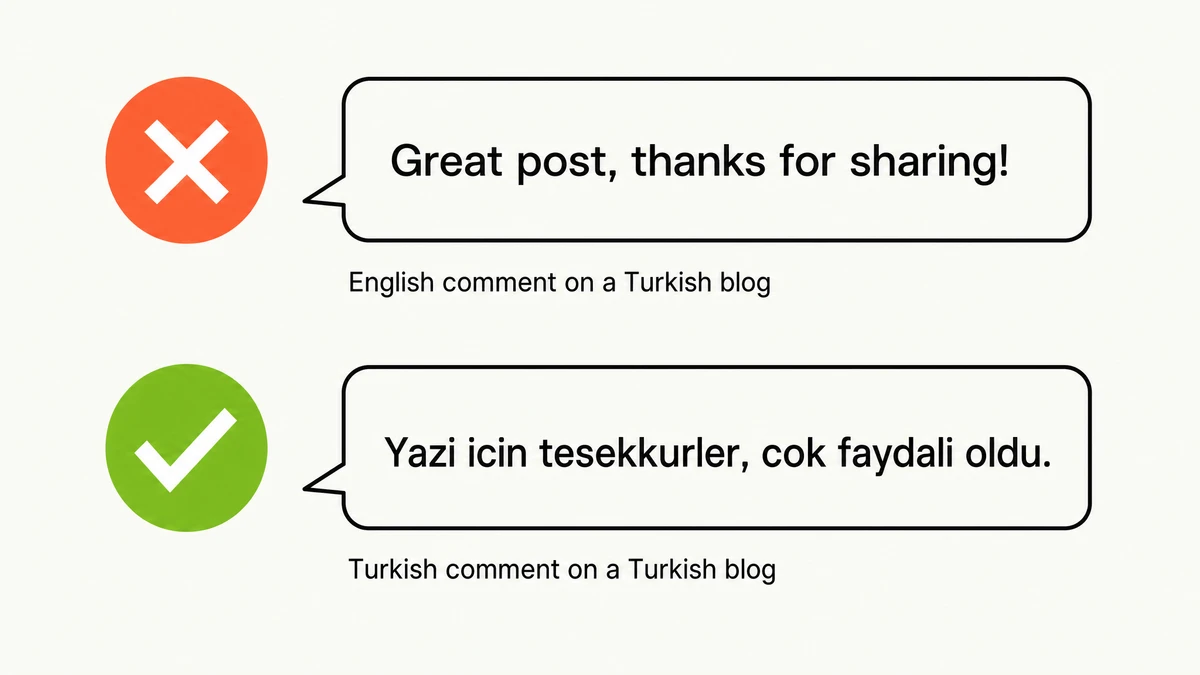
Vì sao điều này quan trọng: Ngôn ngữ mặc định là tiếng Anh. Nếu dự án của bạn bằng tiếng Thổ Nhĩ Kỳ, tiếng Thái, tiếng Indonesia hoặc tiếng Nhật — và danh sách đã được xác minh của bạn được lọc theo ngôn ngữ đó — thì các tài khoản của bạn đã viết bằng tiếng Anh cho một đối tượng không sử dụng ngôn ngữ này.
Những điều cần kiểm tra: Hãy so sánh ngôn ngữ dự án của bạn với ngôn ngữ của cả hai lĩnh vực. Đối với hầu hết người dùng, chúng sẽ không trùng khớp.
Dấu hiệu xấu trông như thế nào: Một blog tiếng Thổ Nhĩ Kỳ, một bài báo tiếng Thổ Nhĩ Kỳ, và dòng chữ tiếng Anh "Bài viết hay, cảm ơn đã chia sẻ!" bên dưới. Người kiểm duyệt chỉ cần một giây để đưa ra quyết định đó.
4. Từ khóa của riêng bạn, được đăng trên blog của người khác
Vì sao điều này quan trọng: Đây là một lỗi rõ ràng trong khối mặc định. GSA SER có hai nhóm macro chú thích, và chúng hoạt động theo hai hướng ngược nhau:
| Macro | Quyết tâm | Hiệu ứng bên trong một bình luận |
|---|---|---|
%blog_title% | Tiêu đề của trang đang được bình luận | Bài viết này giống như được viết bởi một người truy cập thực sự đã mở trang. |
%meta_keyword% | Một từ khóa từ trang đó | Bài viết giống như một độc giả đang bình luận về chủ đề này. |
%keyword%, %keyword1% | Từ khóa dự án của riêng bạn | Đăng tải thông tin về lĩnh vực chuyên môn của bạn trên một blog không liên quan. |
Khối mặc định chứa dòng “Tuyệt vời! Cuối cùng cũng có thông tin về %keyword1%.” Trên một trang về đồ nội thất sân vườn, bình luận đó cho người điều hành biết chính xác bạn đang làm gì. Mọi dòng khác trong đoạn bình luận đều chung chung, đó là lý do tại sao bình luận này lại nổi bật.
Những điều cần kiểm tra: tìm kiếm trong mục Bình luận Blog của bạn %keyword. Nếu nó ở đó, hãy lấy nó ra.
| Vấn đề | Ai bị ảnh hưởng? | Có thể khắc phục bằng một danh sách tốt hơn không? |
|---|---|---|
| Hồ bơi chung tên và thị trấn | Mọi người đều ở chế độ mặc định | KHÔNG |
| Văn bản bình luận spam đã biết | Mọi người đều ở chế độ mặc định | KHÔNG |
| Văn bản tiếng Anh dành cho các mục tiêu không phải tiếng Anh | Mọi chiến dịch không phải tiếng Anh | KHÔNG |
| Từ khóa của riêng bạn trong phần bình luận | Mọi người đều ở chế độ mặc định | KHÔNG |
Cột cuối cùng chính là mấu chốt vấn đề. Bạn không thể giải quyết vấn đề này bằng cách sử dụng danh sách được xác minh tốt hơn, nhiều máy chủ proxy hơn hoặc VPS nhanh hơn. Bản thân văn bản phải thay đổi.
⚙️ Những gì chúng tôi đã thay đổi
Mọi dự án được xây dựng thông qua Asia Virtual Solutions đều “Dự án xếp hạng công cụ tìm kiếm GSA – Thực hiện trọn gói cho bạn”Hoặc GSA SER Builder hiện tự động tạo cả hai trường này.
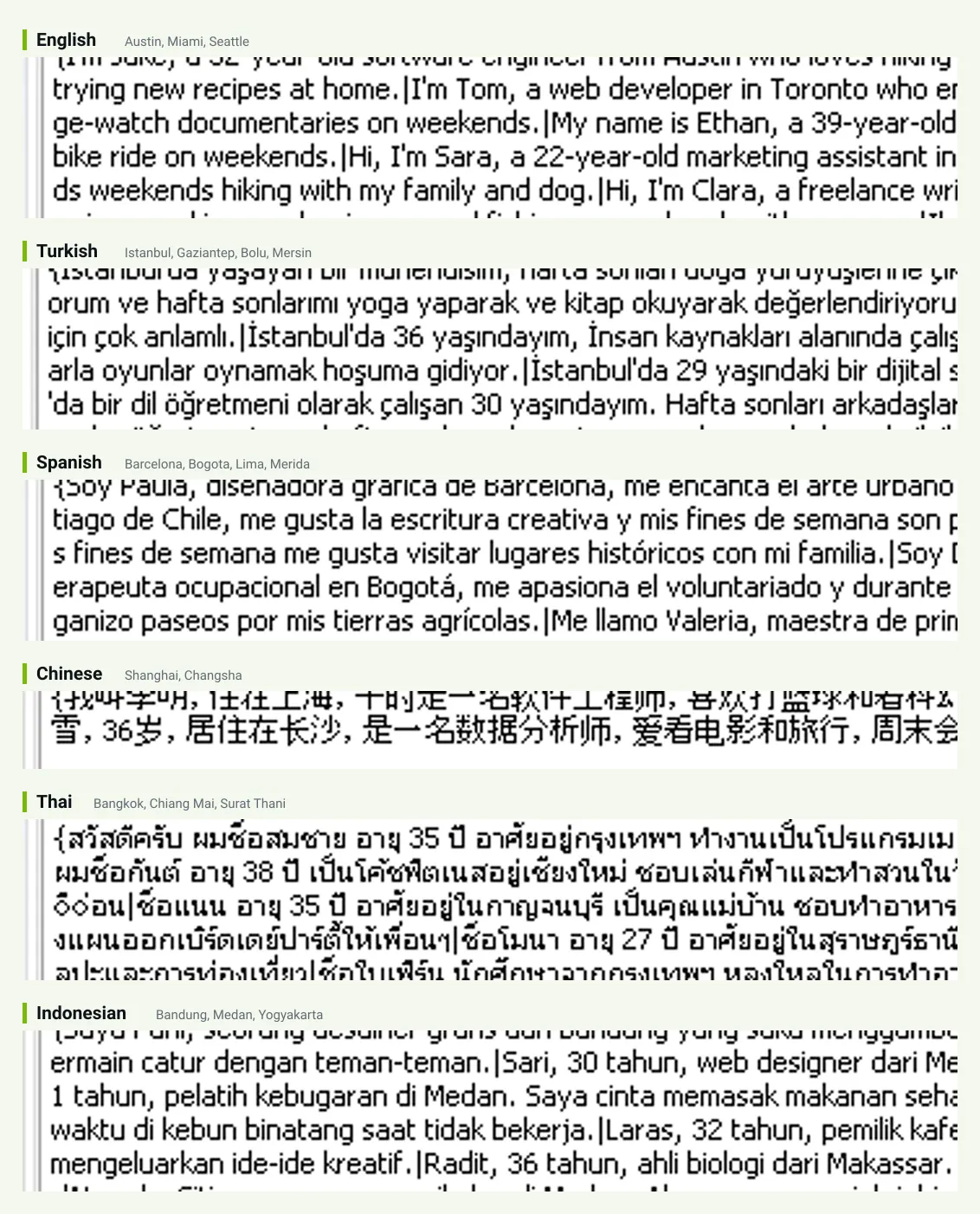
Hồ sơ. Trong quá trình phân tích trang web của bạn, chúng tôi đã xác định được đối tượng người dùng. Mô tả đối tượng đó giờ đây cũng tạo ra... 50 tiểu sử ngắn gọn — Các độ tuổi, nghề nghiệp, vùng miền, sở thích và cấu trúc câu khác nhau — được viết bằng ngôn ngữ dự án của bạn, với tên và địa danh thuộc ngôn ngữ đó. Một dự án tiếng Thổ Nhĩ Kỳ sẽ có tên và thành phố tiếng Thổ Nhĩ Kỳ. Một dự án tiếng Tây Ban Nha thì không có cả hai.
Bình luận. Mỗi dự án cũng nhận được 100 mẫu bình luận Trong ngôn ngữ dự án, được xây dựng bằng cú pháp spin nên chúng mở rộng thành hàng nghìn bình luận khác nhau. Khoảng một phần tư số bình luận đề cập đến trang đang được bình luận bằng cách sử dụng %blog_title% hoặc %meta_keyword%, đó là điều mà một độc giả thực thụ sẽ làm. Không có cuốn nào chứa %keyword%.
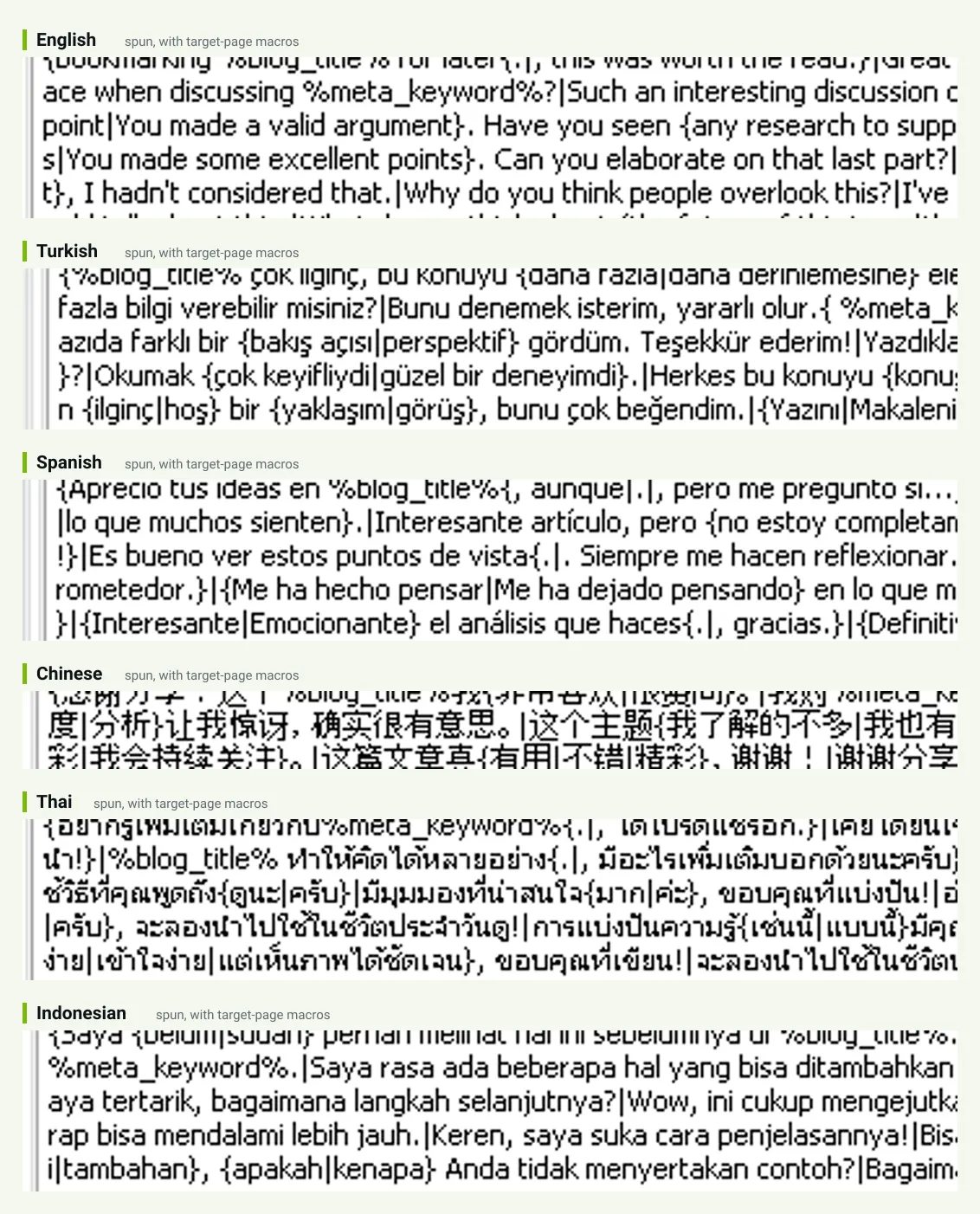
%blog_title% và %meta_keyword%.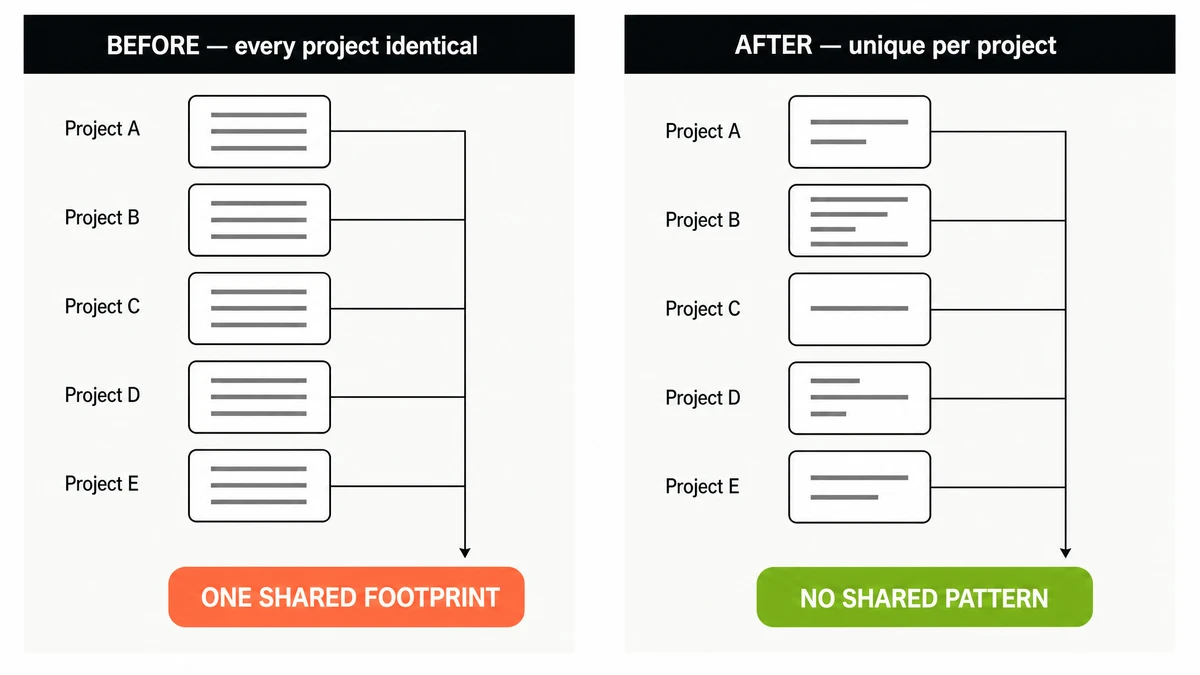
| Mặc định cộng đồng | GSA SER Builder bắt đầu từ hôm nay | |
|---|---|---|
| Nguồn thông tin hồ sơ | Danh sách tên, thị trấn, phim và xe đã được sửa | Được viết bởi độc giả của trang web của bạn. |
| Nguồn bình luận | Kho dữ liệu thư rác được thu thập | Được viết cho dự án của bạn |
| Ngôn ngữ | Chỉ tiếng Anh | Ngôn ngữ dự án của bạn, hỗ trợ 22 ngôn ngữ. |
| Đã chia sẻ với những người dùng khác | Vâng — tất cả bọn họ | KHÔNG |
| Macro trang đích | Hai hoặc ba dòng | Khoảng 1 bình luận trong 4 bình luận |
| Từ khóa của bạn trong phần bình luận | Hiện tại | Bị chặn |
🚩 Những dấu hiệu cảnh báo trong thiết lập hiện tại của bạn
Bạn nên kiểm tra lại bất kỳ dự án nào bạn đang thực hiện, bất kể ai là người xây dựng nó:
- Phần "Giới thiệu về bạn" đề cập đến các thị trấn, phim ảnh hoặc xe hơi không liên quan gì đến doanh nghiệp hoặc thị trường của bạn.
- Một câu từ trong phần Bình luận trên Blog của bạn có thể trả về hàng nghìn kết quả tìm kiếm trùng khớp chính xác trên Google.
- Ngôn ngữ chính của dự án không phải là tiếng Anh, nhưng cả hai trường dữ liệu đều là tiếng Anh.
%keyword%hoặc%keyword1%xuất hiện ở bất kỳ đâu trong văn bản bình luận của bạn.- Các bình luận được chấp nhận rồi biến mất trong vòng vài ngày.
- Cả hai trường này đều giống hệt nhau trên mọi dự án bạn sở hữu — và trên mọi dự án bạn từng mua.
💡 Cách kiểm tra và sửa chữa các dự án của chính bạn
Bạn không cần chúng tôi cho việc này. Nếu bạn tự thiết lập hệ thống của mình, thì việc này đáng giá một giờ đồng hồ:
- Mở một dự án trong GSA SER, vào tab Dữ liệu, và đọc cả hai trường từ đầu đến cuối. Hầu hết mọi người chưa từng làm điều này.
- Sao chép ba câu từ phần bình luận và tìm kiếm từng câu trong dấu ngoặc kép. Điều đó cho bạn biết văn bản của bạn được công khai đến mức nào.
- Xóa mọi thứ
%keyword%và%keyword1%từ phần bình luận. Thay thế chúng bằng%blog_title%hoặc%meta_keyword%, mô tả trang bạn đang đăng bài lên thay vì trang web của riêng bạn. - Nếu chiến dịch của bạn không phải bằng tiếng Anh, hãy viết lại cả hai trường thông tin bằng ngôn ngữ của chiến dịch. Hai mươi bình luận thực sự bằng ngôn ngữ phù hợp sẽ tốt hơn hai trăm bình luận bằng ngôn ngữ sai.
- Hãy viết phần giới thiệu hồ sơ dựa trên những người quen thuộc trong thị trường mục tiêu của bạn, chứ không phải dựa trên tên được tạo tự động. Giữ cho phần giới thiệu ngắn gọn và bình thường.
- Hãy giữ nguyên cú pháp spin. Nó đang hoạt động hữu ích — chỉ cần văn bản nguồn là của bạn.
🔧 Hoặc hãy để dự án đến theo cách đó
Chúng tôi đã xây dựng các dự án GSA SER trọn gói từ tháng 12 năm 2012 và đã hoàn thành gần 5.000 dự án. GSA SER Builder là phiên bản tự động hóa của dịch vụ đó: chỉ cần nhập URL, từ khóa, ngôn ngữ và chi tiết chiến dịch, bạn sẽ nhận được một tệp .ser hoàn chỉnh sẵn sàng để nhập, bao gồm các bài viết, tài khoản email, hình ảnh và nhóm liên kết riêng biệt — và giờ đây còn có cả hồ sơ và bình luận riêng biệt.
Các dự án có giá khởi điểm từ $9.95 cho một cấp độ duy nhất và được hoàn thành trong vòng 24 giờ.
Khác biệt so với bài đăng đầu tiên
Đừng chia sẻ thông tin cá nhân của bạn với mọi người nữa.
Xây dựng dự án GSA SER❓ Câu hỏi thường gặp
Việc này có thay thế danh sách đã được xác minh hay các máy chủ proxy của tôi không?
Không — những thứ đó giải quyết các vấn đề khác nhau. Danh sách đã được xác minh sẽ quyết định nơi bạn có thể đăng bài.. Máy chủ proxy quyết định số lượng tài khoản. Bạn có thể tạo. Điều này quyết định xem văn bản trên các tài khoản đó trông giống của bạn hay của mọi người. Bạn cần cả ba, và đây là thứ mà chẳng ai muốn mua.
Cú pháp spin vẫn còn được sử dụng chứ?
Đúng vậy, rất nhiều — ngay cả phần trợ giúp của GSA SER dành cho trường bình luận cũng khuyến nghị như vậy. Cái thay đổi là văn bản gốc, chứ không phải cơ chế. Mỗi trong số 100 mẫu bình luận đều chứa một số nhóm biến thể, vì vậy tập hợp các biến thể mở rộng thành hàng nghìn biến thể trước khi lặp lại.
Nếu tôi tải lên mẫu tùy chỉnh của riêng mình thì sao?
Mẫu của bạn vẫn kiểm soát mọi thiết lập trong đó — công cụ, bộ lọc, lịch trình, hạn chế ngôn ngữ. Chỉ có hai trường nội dung này được thay thế bằng văn bản được viết riêng cho dự án của bạn. Mọi thứ bạn đã cấu hình một cách có chủ đích sẽ được gửi đi chính xác như khi bạn tải lên.
Những ngôn ngữ nào được hỗ trợ?
Tất cả 22 project languages we offer, including Turkish, Thai, Japanese, Korean, Chinese, Russian, Indonesian, Vietnamese, Arabic, Hindi, Bengali and Slovenian. If a project’s text cannot be generated for any reason, it falls back to a prepared set in the same language rather than to English.
Các dự án cũ của tôi có được cập nhật không?
Các dự án mới sẽ tự động được cập nhật như vậy. Các dự án đã hoàn thành sẽ giữ nguyên văn bản ban đầu. Nếu bạn muốn xây dựng lại một chiến dịch cũ với hồ sơ và bình luận riêng biệt, hãy liên hệ với chúng tôi và chúng tôi sẽ xem xét.
Tôi có thể tự chỉnh sửa các trường thông tin sau khi nhập dữ liệu không?
Vâng. Đó là điều bình thường. .ser Tệp này vẫn giữ nguyên trạng thái có thể chỉnh sửa trong GSA SER như mọi khi. Nếu bạn muốn thêm nhận xét của riêng mình vào đó, không có gì ngăn cản bạn cả.





 English
  简体中文
简体中文  Deutsch (Sie)
  Bahasa Indonesia
  Italiano
  日本語
日本語  한국어
한국어  Português do Brasil
  Русский
  Español de México
  ไทย
ไทย  Tiếng Việt
  Türkçe