



Seu posicionamento ou tráfego caiu após a última atualização do Google e agora você está em dúvida se deve parar de construir links ou cancelar seu VPS porque “GSA SER "Não funciona mais"?
Eis a verdade simples: a maioria das pessoas não perde por usar o GSA SER. Elas perdem porque entram em pânico, mudam tudo muito rápido e perseguem as métricas erradas (LPM e VPM) em vez de construir links consistentes e de alta qualidade ao longo do tempo.
Esta publicação apresenta uma estratégia mais segura para 2026, criada para as condições reais do Google: atualizações de spam, atualizações principais, visões gerais de IA e snippets em destaque.
Resposta rápida: como executar o GSA SER com segurança em 2026
- Não altere nada durante 72 horas após a atualização. As principais atualizações do Google em 2026 levaram a 12 a 18 dias Para finalizar a implementação, as classificações iniciais não significam nada.
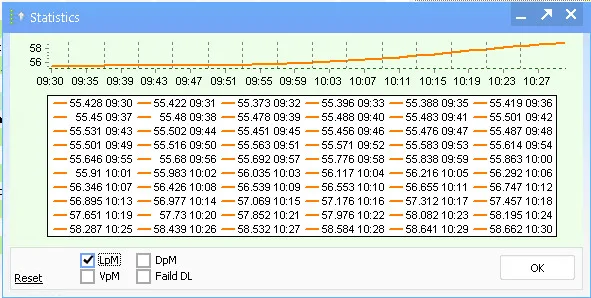
- Pare de se preocupar com LPM e VPM. Eles medem a velocidade de saída, não a qualidade do link. Um VPM alto geralmente significa apenas que você verificou muito lixo.
- Crie menos links, porém de melhor qualidade. Inserções contextuais de links dofollow dentro de conteúdo real, em ritmo constante, durante meses.
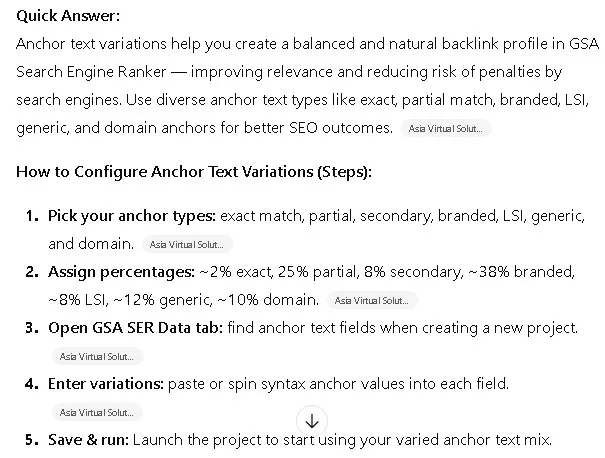
- Mantenha as âncoras em seu estado natural. Aproximadamente 30–40% de marca, 10–15% genéricos, 10–20% com correspondência parcial, 1–2% com correspondência exata.
- Corrija a página antes de construir sobre ela. As visões gerais e os trechos de código gerados por IA priorizam uma estrutura clara, portanto, bons links não conseguem salvar uma página fraca.
Duração da implementação da atualização: Painel de status da pesquisa do Google, verificado em 8 de setembro de 2026.
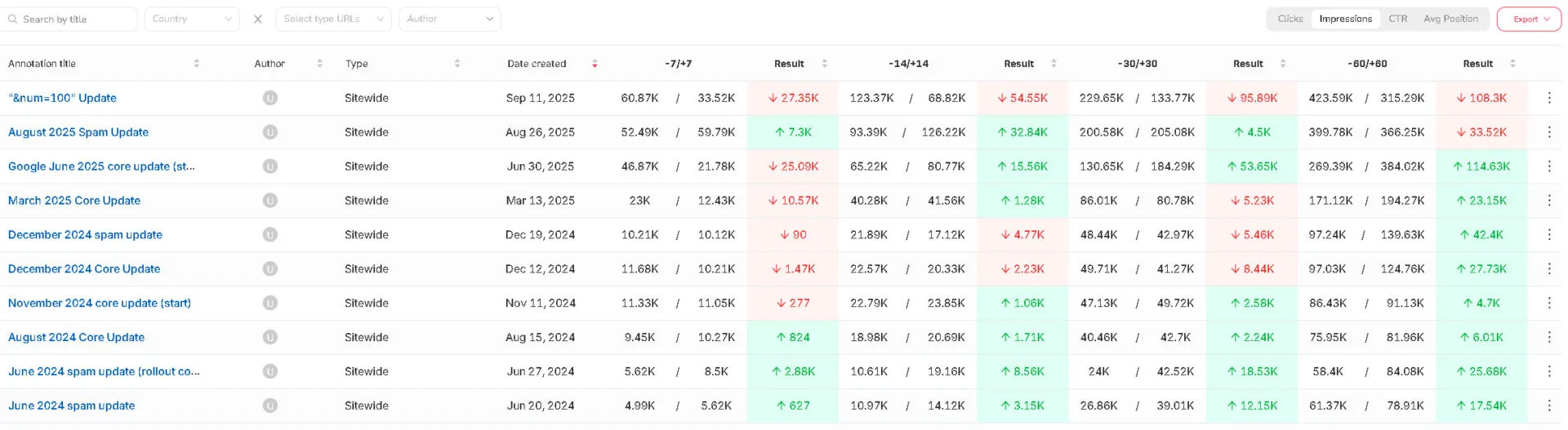
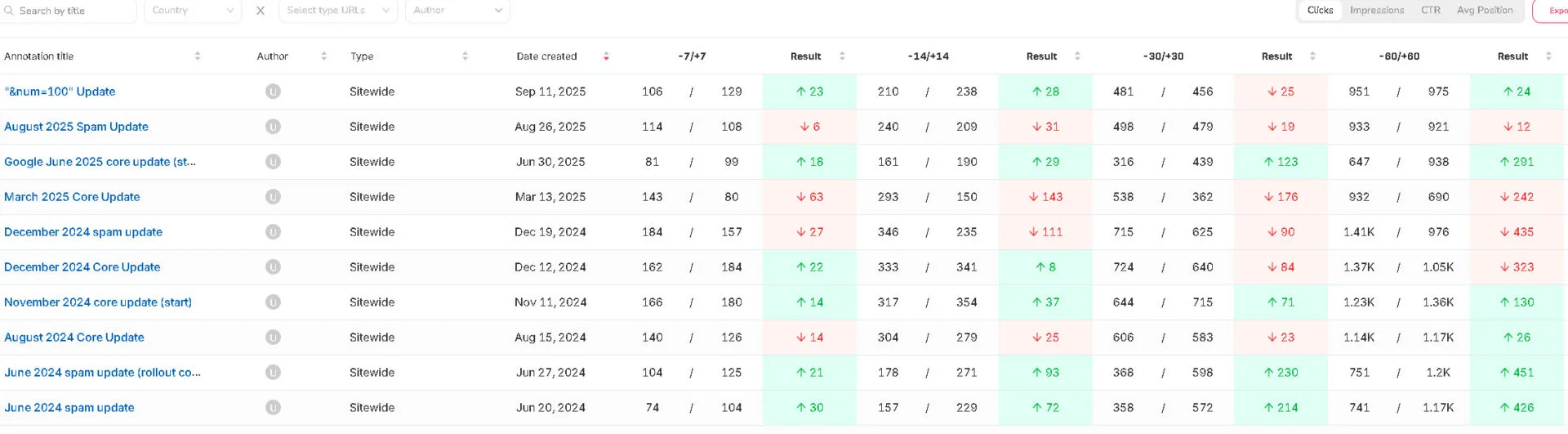
Primeiro, não faça grandes alterações logo após uma atualização do Google.
As atualizações do Google podem deixar sites fora do ar por algumas semanas, e então a próxima atualização ou aprimoramento os coloca de volta no ar. É exatamente por isso que decisões tomadas por impulso costumam causar mais danos do que a própria atualização.
Um padrão típico se parece com isto:
- Atualização chega, rankings caem.
- As pessoas fazem mudanças precipitadas, o que torna o site instável.
- A próxima atualização será lançada. A recuperação teria ocorrido, mas o site está diferente agora, e os resultados pioram.
Quanto tempo realmente leva para as atualizações serem concluídas?
Esta é a parte que resolve a discussão. O Google publica o início e o fim de cada atualização de classificação, e os dados recentes mostram por que avaliar sua posição no ranking no segundo dia é inútil:
- Atualização principal de dezembro de 2025 — lançado em 11 de dezembro, levou 18 dias para concluir.
- Atualização principal de março de 2026 — lançado em 27 de março, levou 12 dias.
- Atualização principal de maio de 2026 — lançado em 21 de maio, levou quase 12 dias.
- As atualizações de spam são executadas separadamente e terminam rapidamente. — as atualizações de spam de março, junho e agosto de 2026 foram concluídas em menos de três dias.
Portanto, uma atualização principal que você notou no terceiro dia ainda está longe de ser concluída. Os rankings realmente mudam enquanto uma implementação está em andamento. Aguarde o Google confirmar que a implementação foi concluída antes de tirar qualquer conclusão.
A “Regra das 72 Horas” (O que fazer imediatamente)
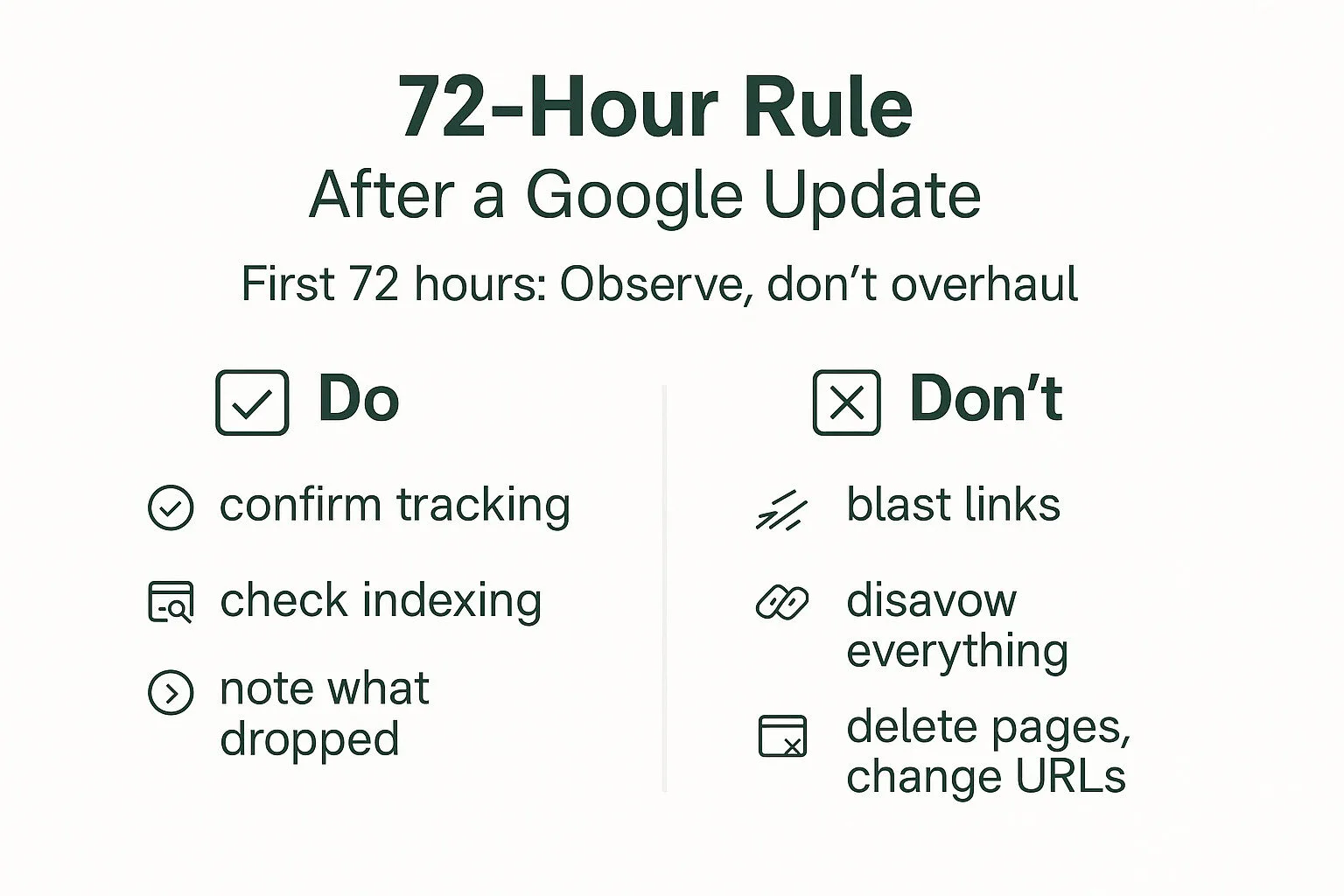
Durante as primeiras 72 horas após uma atualização, você não está corrigindo nada. Você está confirmando dados, verificando a indexação e identificando o que realmente foi perdido. Grandes mudanças vêm depois, não durante o período de pânico.
- Verifique o Search Console em busca de erros de indexação e alterações na cobertura, não apenas a posição.
- Identifique quais páginas e consultas específicas apresentaram queda de desempenho. Uma queda de desempenho em todo o site e uma queda em uma única página exigem respostas diferentes.
- Verifique se a atualização ainda está sendo distribuída.
- Mantenha suas campanhas atuais em andamento no ritmo atual. Interrompê-las repentinamente já é uma mudança em si.
Por que a obsessão por LPM e VPM é a maneira mais rápida de se dar mal
Maioria GSA Search Engine Ranker Os iniciantes pensam assim: Se meu LPM for alto e meu VPM for alto, estou ganhando.
Em 2026, muitas vezes é o oposto. LPM e VPM são métricas de velocidade de produção, não métricas de qualidade de SEO. Um VPM alto pode simplesmente significar que você verificou um grande número de links de baixo valor.
O que LPM e VPM realmente significam
- LPM (Links por Minuto) — quantos links a ferramenta tenta ou cria por minuto.
- VPM (Verificado por Minuto) — quantos links são confirmados ou verificados por minuto.
Nenhum dos números informa nada sobre os fatores que realmente determinam se o link é útil:
- Se os links são relevantes.
- Se as colocações são contextuais.
- Se as páginas estão indexadas.
- Se o conteúdo é legível.
- Verificar se o perfil do link parece natural.
A estratégia segura do GSA SER para 2026 (O que funciona agora)
Se você quer que o GSA SER ajude, em vez de prejudicar, seu posicionamento nos resultados de busca, a estratégia é simples: crie menos links, mas que sejam melhores. Mantenha a consistência por meses. Use posicionamentos contextuais e conteúdo de qualidade. A estrutura por trás dessas dicas está detalhada em nosso guia. Como a estrutura de níveis de 2026 se encaixa.
Seu novo objetivo: Links dofollow contextuais em um ritmo natural.

Conteúdo de qualidade + links consistentes sempre superam links em massa.
Links contextuais são links inseridos em conteúdo real, dentro de parágrafos, onde o texto ao redor corresponde ao seu tópico. Isso é o oposto de:
- comentários de spam
- perfis de baixa qualidade
- lixo aleatório de fórum
- Páginas geradas automaticamente em massa, sem nenhum tópico real.
Se você deseja um tutorial passo a passo com as configurações exatas do SER, use nosso guia para Criando links contextuais dofollow com o GSA Search Engine Ranker..
Eis a parte que a maioria das pessoas não quer ouvir: Bons links não podem salvar conteúdo ruim.
O Google está cada vez melhor em identificar páginas que não merecem um bom posicionamento e, com as Visão Geral com IA e os snippets em destaque, prioriza páginas que respondam às perguntas de forma clara. Portanto, a combinação vencedora é conteúdo útil no seu site, estrutura limpa (títulos, listas, perguntas frequentes) e backlinks contextuais consistentes.
O que significa “conteúdo melhor” (regras simples)
- Responda à pergunta rapidamente.
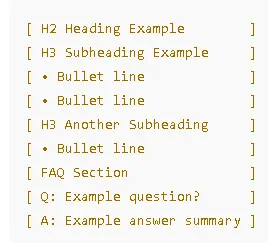
- Utilize títulos H2 e H3 que correspondam à intenção da pesquisa.
- Inclua marcadores e listas passo a passo.
- Inclua uma seção de perguntas frequentes (FAQ).
- Evite informações irrelevantes e o uso excessivo de palavras-chave.
Um Plano Simples de Velocidade de Linkagem (Para que Você Pare de Exagerar)
Em vez de correr em velocidade máxima, use uma aceleração gradual que pareça natural.
Exemplo de Cronograma de Progressão Gradual (Ideal para Iniciantes)
| Intervalo semanal | Volume de links | Foco de ancoragem | Notas |
|---|---|---|---|
| Semana 1–2 | Baixo | Principalmente âncoras de marca, além de âncoras de URL simples. | Mantenha o volume baixo, concentre-se na indexação e na estabilidade, e observe o Search Console antes de aumentá-lo. |
| Semanas 3 a 6 | Ligeiro aumento, apenas se estável. | Ainda predominantemente com marca e URL, adicione correspondência parcial com cuidado. | Aumente as configurações somente se tudo parecer estável, mantenha a qualidade do conteúdo consistente e evite alterar muitas configurações ao mesmo tempo. |
| Semanas 7 a 12 | Ritmo constante | Mix equilibrado, ainda com predominância de segurança. | Sem picos repentinos, continue adicionando conteúdo de apoio, revise semanalmente e ajuste gradualmente. |
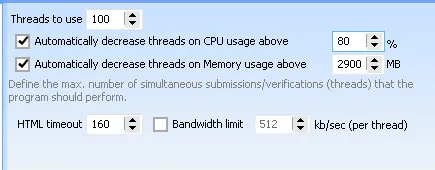
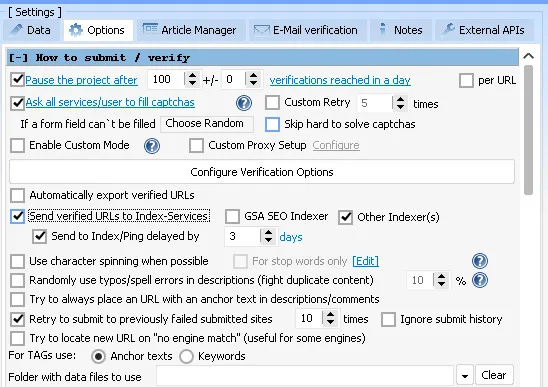
As duas telas de configurações abaixo permitem controlar esse ritmo no GSA SER: threads em todo o sistema e tempo limite de HTML, além de velocidade de envio, reverificação e indexação por projeto.
Texto âncora em 2026: Mantenha a naturalidade ou pague o preço.
O texto âncora ainda é importante, mas o uso agressivo de âncoras de correspondência exata é uma das maneiras mais fáceis de causar problemas.
Uma mistura de ancoragem segura (exemplo simples)
Do mais usado ao menos usado:
- Marcas âncora (maior participação)
- Âncoras de URL sem formatação
- Âncoras genéricas (“saiba mais neste site”)
- âncoras de correspondência parcial
- Âncoras de correspondência exata (menor participação)
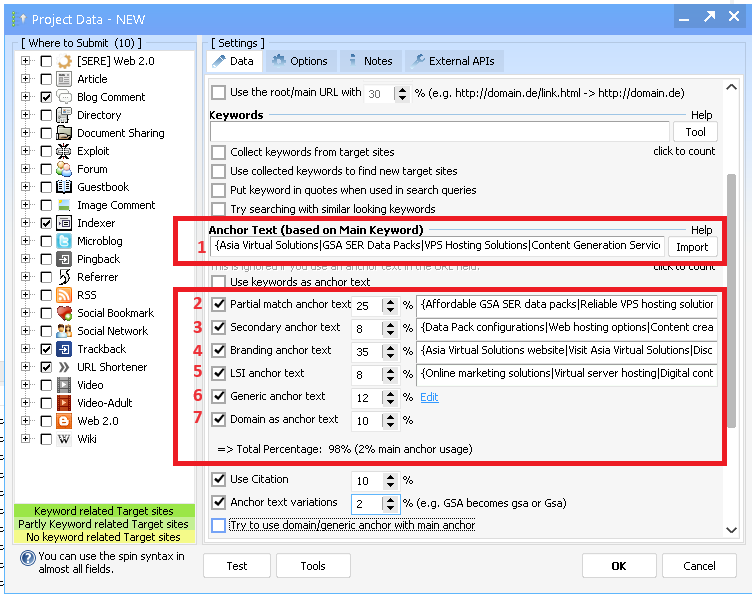
Eis como preenchemos os sete campos de texto âncora no GSA SER:
| Campo de ancoragem | Participação alvo |
|---|---|
| Texto âncora principal (correspondência exata) | 1–2% |
| Correspondência parcial | 10–20% |
| Secundário | 5–10% |
| Marca | 30–40% |
| LSI | 5–10% |
| Genérico | 10–15% |
| Domínio como âncora | 10–15% |
Não é possível definir uma porcentagem no campo de ancoragem principal. Ele usa o que sobrar de 100% depois que os outros seis campos forem preenchidos, e é por isso que buscamos valores entre 1 e 2% ali. Nosso guia de otimização de texto âncora Analisa cada campo em detalhes.
SEO em 2026: Visões gerais de IA e snippets em destaque mudaram o jogo.
Mesmo que seu posicionamento esteja bom, a própria página de resultados mudou. Os Resumos com IA podem responder à pergunta sem que o usuário precise clicar, e os snippets em destaque podem ocupar o primeiro lugar mesmo que você não esteja em primeiro. Seu trabalho é facilitar a extração e o resumo das suas páginas pelo Google.
Como estruturar páginas para aumentar as chances de obter um snippet em destaque
- Uma breve definição, com 40 a 60 palavras, deve aparecer perto do início da resposta.
- Títulos claros baseados em perguntas (H2 e H3).
- Listas com marcadores para respostas rápidas.
- Etapas numeradas para consultas do tipo "como fazer".
- Uma pequena seção de perguntas frequentes (FAQ) está no final da página.
- Uma tabela comparativa onde fizer sentido.
Como o GSA SER pode apoiar a visibilidade de trechos de código e IA (de forma inteligente)
O GSA SER não cria snippets em destaque diretamente. O que ele pode fazer é dar suporte às páginas criadas para conquistá-los:
- Construindo sinais de autoridade consistentes ao longo do tempo.
- Impulsionando rastreadores e a descoberta por meio de links contextuais.
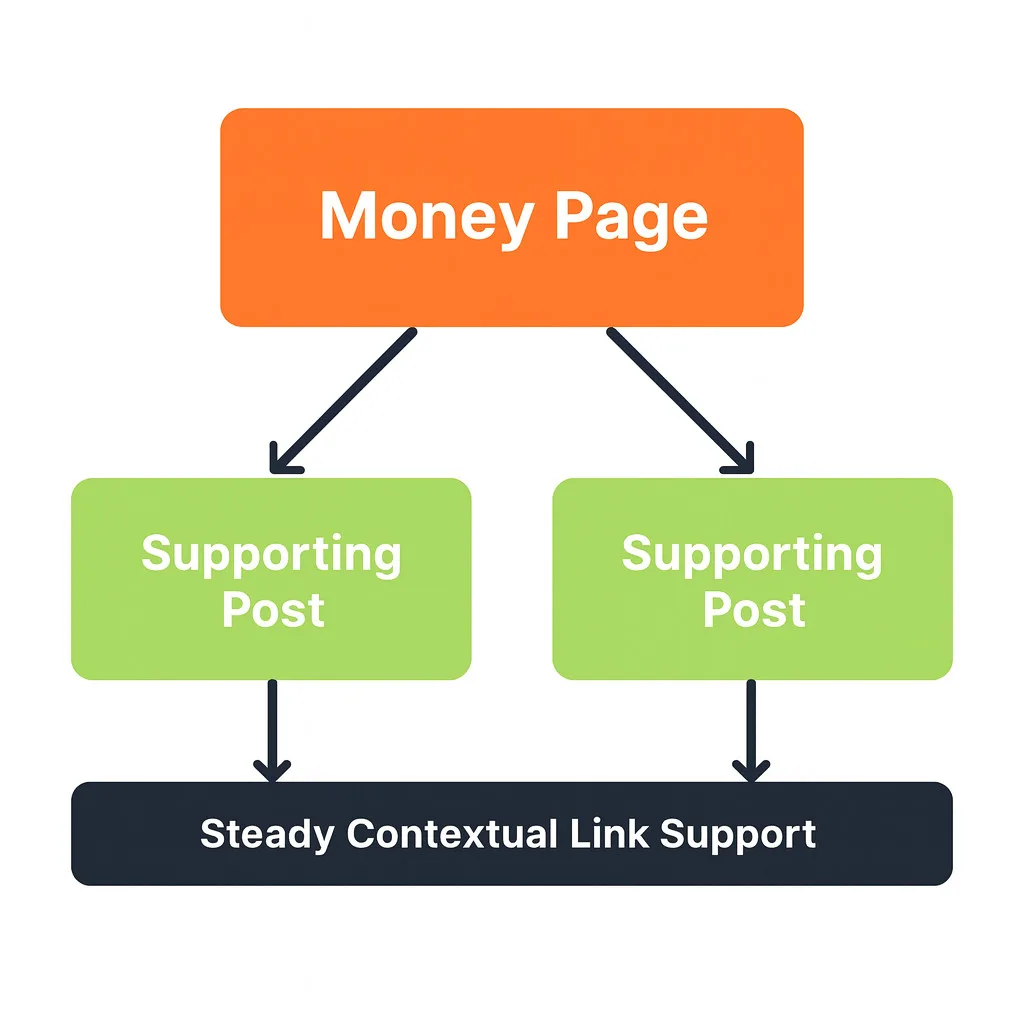
- Fortalecimento de agrupamentos temáticos — um guia principal e artigos de apoio.
Portanto, a ordem importa: primeiro construa a estrutura correta da página e, em seguida, construa os links certos para dar suporte a ela.
Erros a evitar (que vejo todas as semanas)
- Tratar LPM ou VPM elevados como o objetivo principal.
- Usar conteúdo fraco e esperar que links resolvam o problema.
- Criação agressiva de links logo após uma atualização do Google.
- Usar muitas âncoras de correspondência exata.
- O volume de dados da conexão aumenta repentinamente, e depois para completamente.
- Envio de links indesejados diretamente para páginas de monetização.
O que você deve fazer a seguir (Plano de ação simples)
- Não entre em pânico após as atualizações. Aguarde e observe.
- Pare de se preocupar com LPM e VPM.
- Melhore a estrutura do conteúdo para trechos e a formatação compatível com IA.
- Crie links contextuais dofollow de forma consistente.
- Mantenha o texto âncora natural.
- Aumente a escala gradualmente ao longo de meses, não de dias.
Para obter as configurações exatas e o passo a passo completo, utilize nosso Tutorial sobre links contextuais dofollow.
Perguntas frequentes
Devo interromper o GSA SER após uma atualização do Google?
Não. Parar repentinamente já é uma mudança e interrompe o padrão estável que você vinha construindo. Mantenha as campanhas em andamento no ritmo atual e use as primeiras 72 horas para confirmar os dados, em vez de reagir. As atualizações principais de 2026 levaram de 12 a 18 dias para serem concluídas, portanto, agir rapidamente não significa que você está na posição final.
Qual seria um bom LPM ou VPM em 2026?
A própria pergunta é o problema. LPM e VPM medem a velocidade de execução da ferramenta, não se os links são realmente úteis. Um VPM baixo em posicionamentos contextuais, indexados e relevantes sempre será melhor do que um VPM alto em conteúdo irrelevante. Avalie suas campanhas com base em links contextuais verificados e na evolução do seu ranking.
Quantos links devo criar por dia?
Não existe um número universal, pois isso depende da idade do seu site, do perfil atual e do nicho de mercado. O que importa mais é o formato: comece com um investimento baixo, aumente apenas quando as coisas parecerem estáveis e nunca tenha picos seguidos de interrupções. A tabela de crescimento gradual acima é um padrão inicial seguro para um novo projeto.
Quais porcentagens de texto âncora são seguras?
Procure usar aproximadamente 30–40% de marca, 10–15% genéricos, 10–15% de domínio como âncora, 10–20% de correspondência parcial, 5–10% secundários, 5–10% LSI e apenas 1–2% de correspondência exata. O campo de correspondência exata aceita o que sobrar de 100%, então preencha os outros seis campos deliberadamente.
O GSA SER consegue incluir minha página em uma Visão Geral de IA ou em um snippet em destaque?
Não diretamente. Trechos de código e respostas de IA são conquistados pela estrutura da página: uma resposta curta e direta no topo, títulos em forma de pergunta, listas, etapas e uma seção de perguntas frequentes. O que os links fazem é ajudar a página a ser descoberta, indexada e considerada confiável. Corrija a página primeiro e depois construa a partir dela.
Ainda preciso de um VPS Executar o GSA SER?
Sim, se você quiser que funcione de forma consistente. O GSA SER precisa estar em execução continuamente para manter um ritmo constante, e isso é difícil em um computador doméstico. Um VPS também mantém o trabalho fora do seu próprio IP e conexão.
Considerações finais: Não desista quando as coisas ficarem difíceis — adapte-se e trabalhe de forma mais inteligente.
SEO sempre foi uma estratégia de longo prazo. Em 2026, isso é ainda mais verdade.
O Google fará novas atualizações. Os rankings mudarão novamente. As visões gerais de IA mudarão novamente. Quem vence é quem se mantém consistente, constrói qualidade ao longo do tempo e para de perseguir métricas de vaidade.
Se você estiver usando o nosso VPS GSA SER Se você não tiver certeza se sua configuração é segura, entre em contato comigo. Terei prazer em orientá-lo e ajudá-lo a evitar erros comuns.
Atenciosamente,
Michael Swart
Soluções virtuais da Ásia






 English
  简体中文
简体中文  Deutsch (Sie)
  Bahasa Indonesia
  Italiano
  日本語
日本語  한국어
한국어  Português do Brasil
  Русский
  Español de México
  ไทย
ไทย  Tiếng Việt
  Türkçe